
Hot water is something most homeowners don’t think about until it’s gone. Whether you’re taking a morning shower, running the dishwasher, doing laundry, or washing dishes after dinner, your water heater works behind the scenes every single day to keep your home comfortable.
After working with homeowners across Orléans, Ottawa, Cumberland, and Rockland, I’ve found that choosing the right water heater isn’t simply about replacing the old one with something similar. Every home has different hot water needs, and selecting the right system can improve comfort, lower energy costs, reduce maintenance, and provide years of reliable performance.
Many homeowners contact me after searching for hot water tank installation Ottawa, water heater repair near me, HVAC Ottawa, HVAC contractor Ottawa, or hot water tank replacement because their current unit has stopped working or isn’t meeting their family’s needs anymore. While replacing a failed unit is sometimes necessary, I always take the time to help homeowners understand all of their options before making a decision.
The right water heater should fit your household’s hot water usage, available space, energy goals, and long-term budget—not just today’s immediate need.
This guide explains exactly how I help homeowners choose the best water heater or hot water tank for their home.
Why Choosing the Right Water Heater Matters
A water heater is one of the most frequently used appliances in your home.
Every day it provides hot water for:
- Showers
- Baths
- Laundry
- Dishwashing
- Cooking
- Cleaning
Because it operates continuously throughout the year, it also contributes significantly to household energy consumption.
Choosing the wrong system can result in:
- Running out of hot water
- Higher utility bills
- More frequent repairs
- Shorter equipment life
- Higher operating costs
Choosing the right system provides:
- Reliable hot water
- Better efficiency
- Lower monthly energy costs
- Improved long-term value
I Start by Understanding Your Household’s Hot Water Needs
Every family uses hot water differently.
Before recommending any equipment, I ask questions such as:
- How many people live in the home?
- How many bathrooms are used regularly?
- Does everyone shower around the same time?
- Are large appliances often running simultaneously?
- Are there teenagers or a growing family?
- Is the home expected to expand in the future?
These questions help determine how much hot water your household actually requires.
There’s no benefit in installing equipment that’s larger than necessary.
Likewise, an undersized system may leave you waiting for hot water when you need it most.
Understanding Traditional Hot Water Tanks
Storage tank water heaters remain the most common option found in homes throughout Ottawa, Orléans, Cumberland, and Rockland.
These systems store heated water in an insulated tank until it’s needed. They are available in different capacities and can be powered by natural gas or electricity.
Advantages of Traditional Hot Water Tanks
Traditional tanks offer several benefits:
- Lower upfront installation costs
- Proven and reliable technology
- Straightforward maintenance
- Good performance for average households
- Available in a wide range of sizes
For many homeowners, a modern storage tank continues to be an excellent solution.
Understanding Tankless Water Heaters
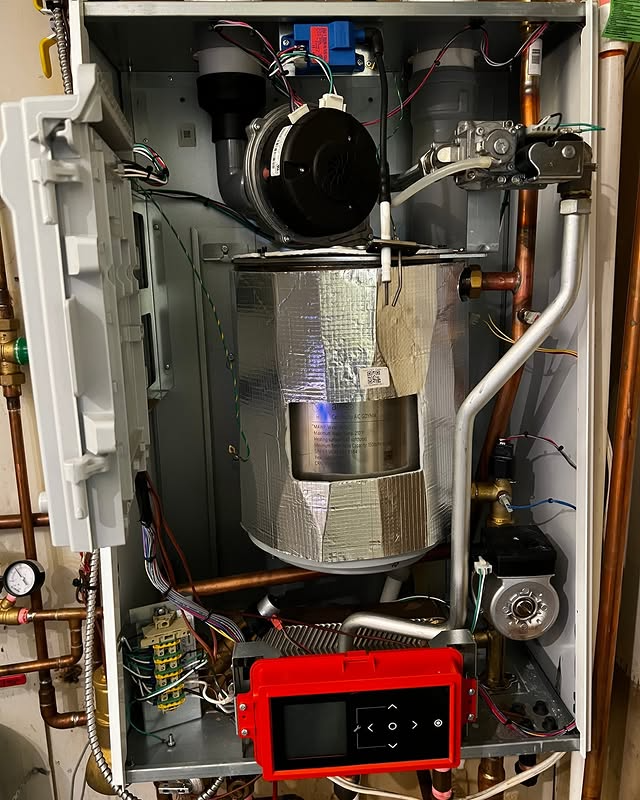
Tankless water heaters work differently.
Instead of storing hot water, they heat water only when a faucet or appliance calls for it. This means you aren’t continuously heating a full tank throughout the day.
Many homeowners appreciate that tankless systems offer:
- Continuous hot water
- Space-saving wall-mounted designs
- Improved energy efficiency
- Longer expected lifespan than many traditional tanks
However, they also involve higher upfront installation costs and require regular maintenance, including periodic descaling in areas with mineral-rich water.
Choosing Between Tank and Tankless
One of the most common questions I receive is:
“Which one is better?”
The honest answer is:
It depends on your home and your family’s needs.
A traditional storage tank often makes sense if:
- Your household has predictable hot water usage.
- You want a lower upfront investment.
- You’re replacing an existing tank with minimal modifications.
A tankless water heater may be a better fit if:
- You have a larger family with frequent hot water use.
- You want to save floor space.
- You’re interested in higher long-term efficiency and don’t mind the higher initial cost.
My recommendation always depends on how your household actually uses hot water—not on a one-size-fits-all answer.
Proper Sizing Is One of the Most Important Decisions
A common mistake homeowners make is choosing equipment based solely on price.
Sizing is just as important.
If a water heater is too small, your family may regularly run out of hot water.
If it’s unnecessarily large, you’ll spend more keeping extra water heated than you actually need.
When helping homeowners in Ottawa, Orléans, and Cumberland, I evaluate:
- Household size
- Bathroom count
- Peak hot water demand
- Daily usage habits
- Future family plans
Proper sizing improves both comfort and efficiency.
Energy Efficiency Can Lower Monthly Utility Bills
Water heating represents a meaningful portion of a home’s annual energy use.
Modern equipment has become much more efficient than older systems.
When evaluating a replacement, I consider:
- Equipment efficiency ratings
- Fuel source
- Standby heat loss
- Household usage patterns
Many homeowners notice lower operating costs after replacing an aging water heater with a newer, more efficient model.
I Consider Available Installation Space
Not every home has the same amount of mechanical room space.
Some utility rooms comfortably accommodate a large storage tank.
Others benefit from the compact footprint of a wall-mounted tankless unit.
Space limitations sometimes influence which option provides the best overall solution.
Water Quality Matters
Water quality throughout Ottawa and surrounding communities can influence the performance and lifespan of water heaters.
Mineral deposits gradually accumulate inside tanks and heat exchangers.
Over time this can reduce efficiency and increase wear.
Regular maintenance helps minimize these effects, especially annual flushing for tank systems.
I Evaluate Long-Term Ownership Costs
The purchase price tells only part of the story.
I also look at:
- Expected lifespan
- Maintenance requirements
- Energy consumption
- Repair frequency
- Replacement costs
Sometimes spending more initially leads to lower overall ownership costs over many years.
Other times, a traditional storage tank provides the best value for the homeowner’s situation.
Signs It May Be Time to Replace Your Water Heater
Many homeowners wait until the system completely fails.
Often, there are warning signs first.
Common indicators include:
- Inconsistent hot water
- Water that’s not as hot as it used to be
- Rust-colored hot water
- Strange popping or rumbling noises
- Visible leaks
- Increasing energy bills
- Frequent repairs
- The unit approaching or exceeding its expected service life.
Addressing these signs early allows homeowners to plan a replacement instead of facing an emergency.
Regular Maintenance Protects Your Investment
No matter which type of water heater you choose, maintenance plays a major role in long-term performance.
For storage tanks, I recommend:
- Annual inspections
- Tank flushing
- Pressure relief valve checks
- Anode rod inspections
- Connection inspections
For tankless systems, regular descaling and manufacturer-recommended servicing are important to maintain efficiency and reliability.
Routine maintenance helps extend equipment life while reducing the likelihood of unexpected breakdowns.
Integrating Water Heating With Your HVAC System
Many homeowners don’t realize that water heating is closely connected to overall home efficiency.
When I evaluate a home’s HVAC system, I often consider:
- Furnace performance
- Boiler operation
- Air conditioning efficiency
- Ventilation
- Water heating equipment
Looking at the entire mechanical system helps identify opportunities to improve overall energy performance and comfort.
Why Local Experience Matters
Homes throughout Ottawa, Orléans, Cumberland, and Rockland experience unique conditions.
Long winters, seasonal temperature swings, and varying household demands all influence water heater performance.
Because I work in these communities every day, I understand:
- Common installation challenges
- Local building styles
- Typical family usage patterns
- Seasonal performance demands
This allows me to recommend solutions that fit both the home and the local climate.
My Goal Is to Help You Make the Right Long-Term Decision
Every recommendation I make is based on four priorities:
Reliability
A system should consistently provide the hot water your family needs.
Efficiency
Lower energy consumption helps reduce long-term operating costs.
Comfort
Your household should have enough hot water when it’s needed most.
Value
The right system should provide years of dependable performance while making financial sense.
There isn’t one perfect water heater for every homeowner.
The best choice is the one that fits your family’s specific needs.
Final Thoughts
Choosing the right water heater or hot water tank is about much more than replacing old equipment. It’s an opportunity to improve comfort, reduce energy costs, and invest in a system that will serve your family reliably for many years.
Whether a traditional storage tank or a tankless water heater is the better fit depends on your home’s size, hot water usage, available space, budget, and long-term goals. By carefully evaluating these factors before making a recommendation, I help homeowners throughout Orléans, Ottawa, Cumberland, and Rockland choose a solution that delivers dependable performance and lasting value.
My goal is always to make sure you have the right amount of hot water, the best possible efficiency, and confidence that your home’s water heating system will perform reliably every day—not just today, but for years to come.