
A furnace should never sound like it’s begging for help. When the temperature drops across Ottawa, Orléans, Cumberland, and Rockland, I start getting the same kind of calls from homeowners:
“My furnace is making a loud banging noise.”
“I hear rattling every time it starts.”
“There’s a high-pitched squeal coming from the furnace room.”
“Why does my furnace sound like it’s grinding?”
“The noise keeps getting worse — is it dangerous?”
Noisy furnaces are more than just annoying — they’re a clear warning sign that something inside the system isn’t working properly. Ignoring the sound never makes it go away. In fact, noisy furnaces almost always develop into more serious problems, often leading to full breakdowns or costly winter repairs.
Over the years, I’ve fixed every type of furnace noise imaginable. Whether it’s a simple airflow issue or a failing motor, the key is diagnosing the sound properly before the damage spreads. I follow a strict, systematic process every time because the cause of a furnace noise isn’t always what it seems — and guessing is never an option.
Below is my detailed, step-by-step process for fixing noisy furnaces in Ottawa and the surrounding areas — and how I bring silence, comfort, and safety back into your home.
Why Ottawa Furnaces Become Noisy in the First Place
Before I jump into the step-by-step breakdown, it’s important to understand why this problem is so common in our region.
Ottawa’s climate pushes furnaces harder than most cities. Between temperature swings, long heating cycles, and deep freezes, local furnaces experience intense strain. That strain exposes any weaknesses inside the system — and noise is usually the first signal something is wrong.
Common noise triggers in Ottawa homes include:
- Long runtime during deep freezes
- Build-up of dust and debris
- Loose panels from constant heating/cooling expansion
- Aging motors struggling under winter load
- Frozen exterior vents creating airflow problems
- High static pressure in tight modern homes
- Older ductwork in Orléans and Cumberland neighbourhoods
- Undersized or oversized equipment operating inefficiently
Now let’s break down the exact steps I take when diagnosing and fixing a noisy furnace.
Step 1 — I Listen Carefully Before Touching Anything
This is the most important part — I start by listening.
Every furnace noise tells a story:
Banging
Usually caused by delayed ignition, duct expansion, loose components, or a failing blower.
Rattling
Often loose panels, failing screws, deteriorating blower mounts, or unbalanced fan wheels.
Squealing or Screeching
A clear sign of blower motor issues, belt wear, or bearing failure.
Grinding or Metallic Noise
One of the most serious noises — typically indicates motor or fan assembly damage.
Clicking
Ignition problems, relays failing, or cracked heat exchanger surfaces.
Whistling
Airflow restriction — clogged filters, blocked returns, or undersized ducting.
Once I identify the category of sound, I already have an initial direction. But listening alone is never enough — it’s simply the starting point.
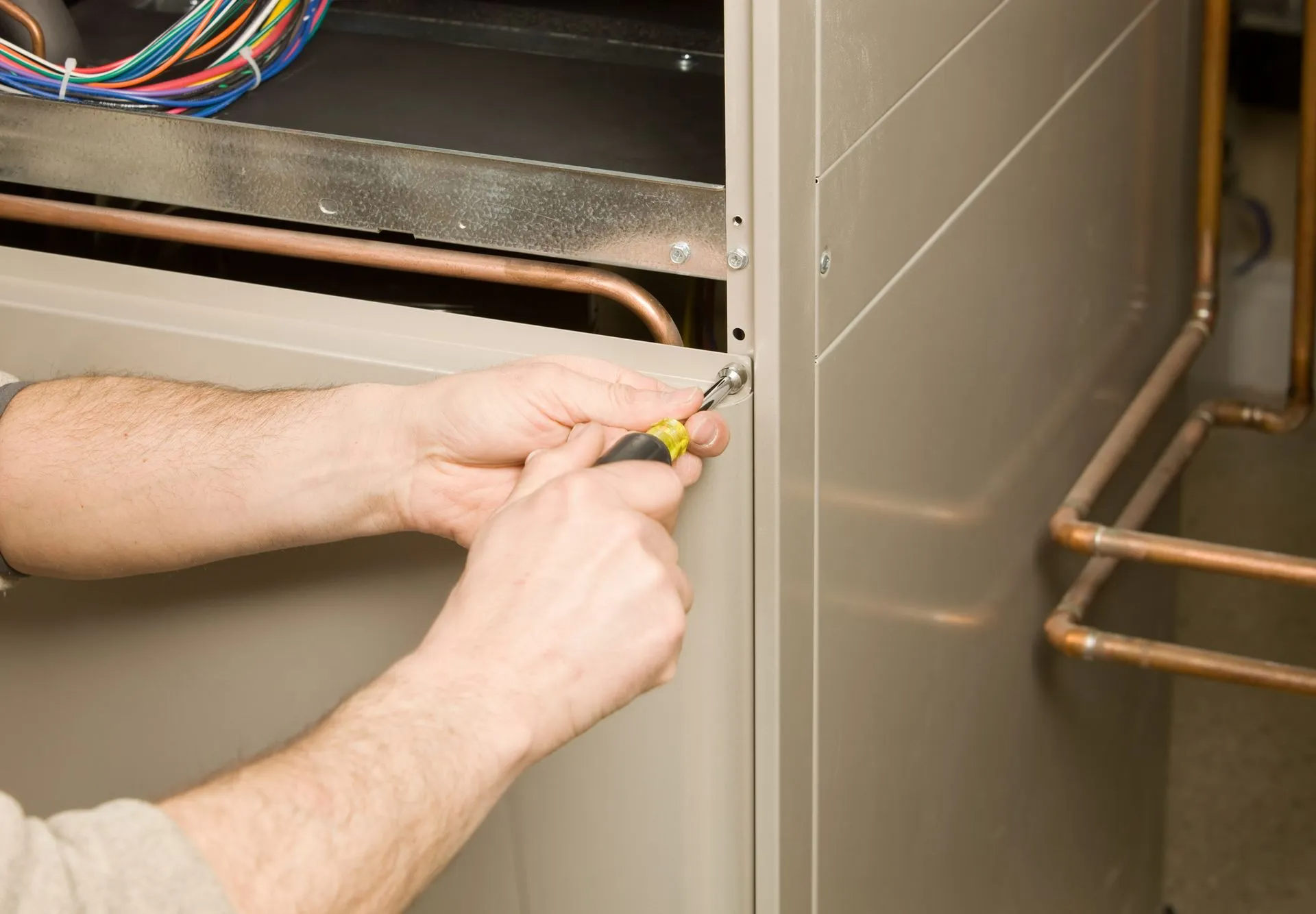
Step 2 — I Inspect the Furnace Exterior and Cabinet
Before opening the furnace, I check:
- Cabinet screws
- Panel alignment
- Vibration points
- Blower compartment door
- Filter door
- Nearby duct joints
- Furnace leveling on the floor
You’d be surprised how many “loud banging noises” come from a panel that shifts from expansion and contraction — especially in colder basements found throughout Rockland and Cumberland.
Once the exterior inspection is finished, I open the furnace and move into the internal components.
Step 3 — I Test the Blower Motor and Fan Assembly
The blower motor is a major source of furnace noise when something is wrong. I check:
Blower Wheel Condition
If the wheel is dirty, warped, unbalanced, or cracked, it creates a rattling or roaring noise.
Motor Bearings
Worn bearings make a grinding or screeching noise, especially during start-up.
Motor Capacitor
Weak capacitors cause the blower to strain, producing irregular sounds.
Fan Speeds
If incorrect, airflow pressure forces the furnace to vibrate noisily.
Blower Mounts and Stabilizers
Loose or worn mounts cause banging or rumbling noises.
Belt Condition (older systems)
A loose or cracked belt causes squealing — very common in older Orléans homes.
The blower is one of the first places I look because it’s the engine that pushes heated air through the home — and when it’s struggling, you hear it.
Step 4 — I Inspect the Burners and Ignition System
Noisy ignition is one of the most alarming furnace sounds — especially loud booming or thudding noises at startup.
These noises are often caused by:
- Delayed ignition
- Dirty burners
- Weak flame signal
- Carbon buildup
- Incorrect gas pressure
- Damaged ignitor
- Improper combustion air
A delayed ignition means gas is pooling for a moment before lighting — creating a mini “explosion.”
This must be corrected immediately.
I clean burners, inspect flame patterns, test the ignitor, and ensure proper ignition timing. After correcting these issues, the furnace lights smoothly and quietly again.
Step 5 — I Check the Heat Exchanger Area
A cracked or compromised heat exchanger can produce:
- Clicking
- Popping
- Metallic ticking
- Expansion noises that get progressively worse
Heat exchangers naturally expand and contract during heating cycles — but unusual noise patterns mean something is wrong.
In Ottawa’s extreme winters, furnaces experience long, intense firing cycles that stress the heat exchanger more than in milder climates. That’s why this step is essential.
If I find:
- Warping
- Hot spots
- Deformation
- Cracks
- Stress marks
— I address the issue immediately because heat exchanger problems affect both performance and safety.
Step 6 — I Examine the Filter, Return Airflow & Static Pressure
Many furnace noises come from airflow problems — not mechanical issues.
Airflow issues create:
- Whistling
- Rattling ducts
- Sheet metal popping
- High-pitched air noise
- Vibration that echoes through the home
I check:
Filter Condition
A clogged filter chokes airflow and forces the furnace to strain loudly.
Return Airflow Pathways
Blocked returns make the furnace sound like it’s gasping.
Duct Static Pressure
High pressure causes rumbling and vibration.
Closed or obstructed vents
This causes airflow turbulence and whistling.
Homes in Orléans and Rockland often have partially blocked returns from furniture, renovations, or basement layouts — which is one of the biggest contributors to furnace noise.
Step 7 — I Inspect the Ductwork and Air Distribution System
Furnace noise doesn’t always come from the furnace — it often echoes through the ducts.
In Ottawa’s older neighbourhoods, duct noise is extremely common due to aging materials or poorly supported duct joints.
I check for:
- Loose duct connections
- Popping sheet metal
- Duct pressure forcing expansion
- Uninsulated metal ducts making loud temperature-shift noises
- Long duct runs vibrating
- Sagging sections creating airflow turbulence
Duct issues cause:
- Thumping
- Booming
- Echoing noises
- Rhythmic vibration
- Tinny metal sounds
By securing, reinforcing, or adjusting ducting, I eliminate these noises at the source.
Step 8 — I Check for Debris, Obstructions, or Foreign Objects
Sometimes the cause is surprisingly simple — debris inside the furnace or ductwork.
I’ve found:
- Toys
- Construction material
- Dust mats
- Loose insulation
- Tools
- Rodent nests
- Paper
- Plastic
These items create airflow noises, rattling, flapping, or vibration that sounds far worse than you’d expect.
This step is especially important in basements that double as storage areas — common in Orléans and Cumberland — where debris can easily get near or inside HVAC equipment.
Step 9 — I Inspect the Inducer Motor & Venting System
The inducer motor removes combustion gases. When it starts failing, you’ll hear:
- Whining
- Grinding
- Humming
- High-pitched squeals
- Rattling vibrations
I also check the venting system for:
- Ice buildup
- Snow blockage
- Sludge in the drain line
- Loose PVC fittings
- Condensation hammering
A struggling inducer makes your furnace sound like it’s fighting to breathe — and fixing it restores quiet, smooth operation.
Step 10 — I Run a Full Heating Cycle to Confirm the Noise Is Gone
Once repairs, adjustments, cleaning, or replacements are completed, I run:
- A full ignition sequence
- A full heating cycle
- A blower cooldown cycle
- Multiple start-stop cycles
I listen again to ensure:
- No new noises appear
- All previous sounds are gone
- Airflow is smooth and strong
- The furnace heats evenly
- Combustion is stable
- Pressure levels are within correct ranges
A furnace should run quietly — you should barely know it’s on.
Once the full test cycle is complete and silent, the repair is officially finished.
Common Noises and Their Root Causes: A Quick Reference Guide
Here’s what different furnace noises usually mean:
Banging or booming
- Delayed ignition
- Loose ductwork
- Burner buildup
Rattling
- Loose panels
- Damaged blower wheel
- Failing mounts
Squealing or screeching
- Blower motor bearings
- Belt issues
- Inducer motor strain
Grinding
- Motor deterioration
- Fan assembly failure
Whistling
- Airflow restriction
- Blocked return
- Filter issues
Clicking
- Ignition trouble
- Flame instability
- Heat exchanger cooling
If the furnace is noisy, one of these is almost always the reason.
Why Noisy Furnaces Should Never Be Ignored
A noisy furnace is rarely “just a noise.”
It usually means:
- A part is failing
- Something is loose
- Airflow is compromised
- Ignition is unstable
- Safety switches are about to trip
- Motors are near burnout
- The system is overheating
- Duct pressure is too high
Noise is your furnace’s way of telling you something is wrong — and catching it early prevents expensive repairs later.
Final Thoughts
Noisy furnaces are one of the most common winter issues I deal with across Ottawa, Orléans, Cumberland, and Rockland — and for good reason. Cold weather stresses the system, amplifies mechanical wear, and exposes problems that went unnoticed during milder months.
By following a strict, step-by-step diagnostic process, I can determine exactly where the noise is coming from and fix the issue at the source — safely, quickly, and permanently.
A furnace should run quietly, smoothly, and efficiently.
If yours doesn’t, it’s time to find out why.